
On this page
Here’s the limitation nobody puts on the label: glucosamine, on its own, has one of the weaker evidence bases of any joint supplement we routinely reach for. It’s cheap, it’s familiar, and it’s been the default answer for so long that most owners assume it’s the gold standard. It isn’t. If your dog isn’t responding to it — or you’re simply looking for something with a sturdier research footing — there are natural options that have actually been tested in dogs with osteoarthritis, not just extrapolated from horse or human studies.
I’ve spent my career on the oncology side of veterinary medicine, not sports medicine or joint rehab, so I’ll say that plainly up front: I’m not the specialist to ask about post-surgical cruciate rehab protocols. But a huge share of my senior cancer patients also have osteoarthritis, and quality of life for a dog going through chemotherapy or recovering from surgery depends enormously on whether they can still get up, walk to the yard, and settle comfortably at night. So I end up thinking about joint support constantly — just from the whole-patient side rather than the orthopedic side.
The myth: “natural” joint ingredients are basically interchangeable, and you just need enough of them in one chew. The reality: the ingredients with genuine dog-specific trial data — omega-3 fatty acids, undenatured type II collagen (UC-II), and green-lipped mussel — work through different, only partly overlapping mechanisms, and the studies behind them used specific doses and specific dog populations. Swapping one for another isn’t a lateral move.
Omega-3 fatty acids have the deepest evidence trail
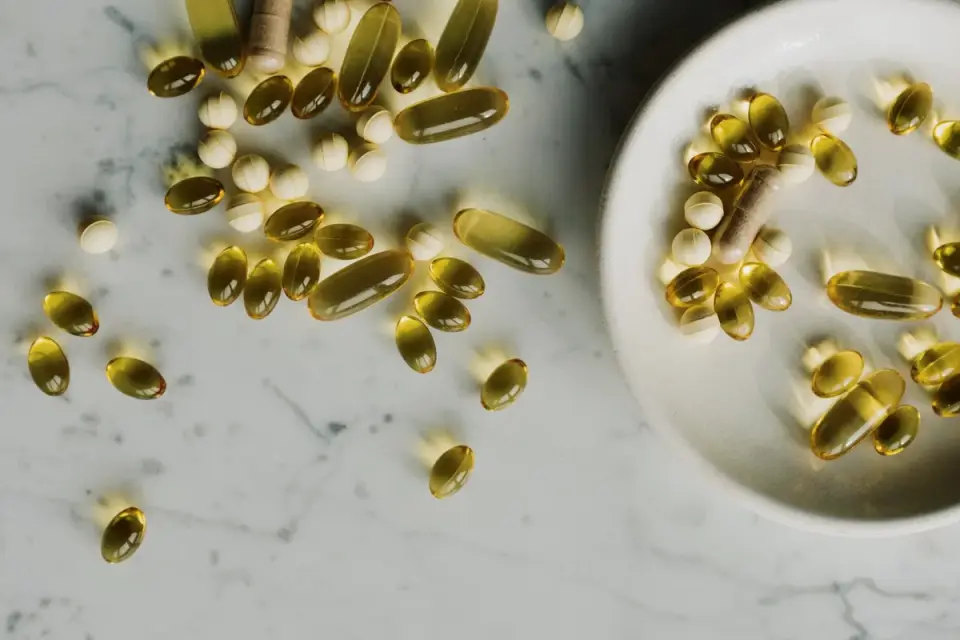
Fish oil is the one natural option I’d call genuinely well-studied rather than promising. A randomized, double-blinded, controlled trial published in a report on the PubMed: multicenter study of the effect of dietary supplementation with fish oil omega-3 fatty acids on carprofen dosage in dogs with osteoarthritis found that dogs already being managed with the NSAID carprofen for chronic OA pain were able to tolerate lower carprofen doses when fish oil was added to their diet. That’s a structure/function result about inflammation and mobility, not a cure — but it’s one of the more rigorously designed trials in this space, and the effect held up across a real multicenter population of client-owned dogs, not a lab colony.
The practical catch is dose and source. EPA and DHA from marine fish oil are the fatty acids with trial data behind them; plant-based omega-3s like flaxseed convert to EPA/DHA in dogs poorly. If you’re going the fish-oil route, look for a product that states EPA/DHA milligrams per serving, not just “fish oil” on the front of the bag.
UC-II collagen works on the immune system, not the cartilage directly
Undenatured type II collagen is a genuinely different mechanism from glucosamine — instead of supplying raw material for cartilage, a small daily dose is thought to interact with gut-associated immune tissue in a way that may help down-regulate the inflammatory response to cartilage breakdown. A randomized, double-blind, placebo-controlled cross-over trial on the PLOS ONE: effects of a feed supplement containing undenatured type II collagen (UC-II) and Boswellia Serrata in dogs with mild to moderate mobility disorders followed 17 dogs through an 8-week supplementation period and reported improvements in owner-assessed mobility and pain scores compared with placebo.
What I’d flag for owners: this was a small trial, and the product combined UC-II with Boswellia serrata, so we can’t cleanly separate how much of the effect came from which ingredient. It’s supportive evidence, not proof that UC-II alone matches an NSAID. Dosing in these studies was also low — milligrams, not the gram-scale doses typical of glucosamine — so a label boasting a huge collagen number per scoop is usually a sign it isn’t UC-II at all.
Green-lipped mussel: real signal, inconsistent trial results
Green-lipped mussel extract from Perna canaliculus contains its own set of omega-3s alongside glycosaminoglycans, and it’s the ingredient I get the most owner questions about after glucosamine itself. The evidence here is genuinely mixed rather than uniformly positive. A study on the Veterinary Medicine and Science: efficacy of a nutritional supplement containing green-lipped mussel, curcumin, and blackcurrant leaf extract in dogs and cats with osteoarthritis reported clinical improvement in owner and veterinary assessments over the study period, while other recent placebo-controlled trials on green-lipped mussel-containing products have found the supplement group improved from baseline but wasn’t clearly separated from the placebo group by the end of the trial.
That inconsistency doesn’t mean the ingredient is worthless. It means the response looks variable dog to dog, and it’s rarely been tested as a true stand-alone ingredient — most trial products combine it with curcumin, omega-3s, or other actives, which makes it hard to credit the mussel extract specifically.
I remember a 9-year-old Labrador named Gus, about 78 pounds, whose owner brought him in mostly for a splenic mass workup — but what she actually wanted to talk about was his back legs. She’d noticed over the winter that he’d stopped jumping into the car on his own and had started pausing at the bottom of the porch steps before committing to climbing them, something he’d never done before. He was already on a joint chew with green-lipped mussel that she’d bought at the pet store, and her real question wasn’t whether to add glucosamine — it was whether the supplement she already had was doing anything, or whether she was just paying for a bag of hope. We talked through switching his supplement budget toward a fish-oil product with a stated EPA/DHA dose, alongside weight management, since he’d put on close to six pounds that year. Watching stairs and car-jumping over the following weeks, rather than trusting the label copy, was the only honest way to know if it was working for him specifically.

Where boswellia and turmeric actually fit
Boswellia serrata and turmeric (curcumin) show up constantly in “natural glucosamine alternative” marketing, and there’s a reasonable mechanistic case for both as anti-inflammatories. The trouble is that in dogs, they’re almost always studied as part of a combination product rather than alone, which is exactly the pattern above with UC-II and green-lipped mussel. Curcumin also has notoriously poor oral bioavailability unless it’s formulated with an absorption enhancer — a plain turmeric sprinkle from the spice aisle is not equivalent to a studied extract, and dosing it accurately at home is genuinely difficult.
If gut tolerance is a concern with any of these — and it often is, since joint supplements are usually oil- or fat-based — that’s worth checking before assuming a supplement failed on the joints when it actually upset digestion. Our guide on signs your dog needs a probiotic walks through what a supplement-related stool change looks like versus something that needs a vet visit.
The sequence I actually walk owners through
Rather than picking one “best” ingredient off a shelf, I ask owners to sequence the decision. First: is your dog overweight? Weight reduction alone changes joint loading more than almost any supplement can, and it’s free. Second: is there an omega-3 product with a stated EPA/DHA dose already in the diet? That’s the ingredient with the sturdiest trial support, and it’s reasonable as a starting point for nearly any dog with early joint changes. Third, if more support is needed, a UC-II or green-lipped mussel product can be layered in — but give it the 8-week window the trials used before judging it, and track something concrete (stairs, the couch jump, the morning stiffness after resting) rather than a vague sense of “seems better.”
None of this is a substitute for a lameness exam if your dog is limping, yelping, or reluctant to bear weight — those signs deserve imaging and a real diagnosis, not a supplement trial. And if your dog is already on a probiotic for gut support, it’s worth reading how joint chews and probiotic capsules can interact on the label side; our best probiotic for dogs comparison scores products on the same evidence-first rubric I’d want applied to a joint supplement.
I think about this most with my own patients nearing the end of chemotherapy, when an owner is trying to decide where to spend a limited supplement budget for a dog who’s already tired of pills. In those conversations I steer toward omega-3s first, almost every time — not because the other ingredients are bogus, but because that’s the one where I can point to a specific trial and say, this is roughly what was tested, and this is roughly what changed. That’s a small, honest thing to be able to say to someone who’s already making harder decisions about their dog’s care that week.
Bottom line: if you’re moving away from glucosamine, omega-3 fatty acids with a stated EPA/DHA dose have the most consistent dog-specific evidence, UC-II and green-lipped mussel have real but narrower support usually shown in combination products, and boswellia or curcumin are reasonable add-ons rather than stand-alone fixes — sequence them, don’t stack them all at once, and judge each one against something you can actually observe.
Sources
- Multicenter study of the effect of dietary supplementation with fish oil omega-3 fatty acids on carprofen dosage in dogs with osteoarthritis — PubMed
- Effects of a feed supplement containing undenatured type II collagen (UC-II) and Boswellia Serrata in the management of mild/moderate mobility disorders in dogs — PLOS ONE
- The efficacy of a nutritional supplement containing green-lipped mussel, curcumin and blackcurrant leaf extract in dogs and cats with osteoarthritis — Veterinary Medicine and Science