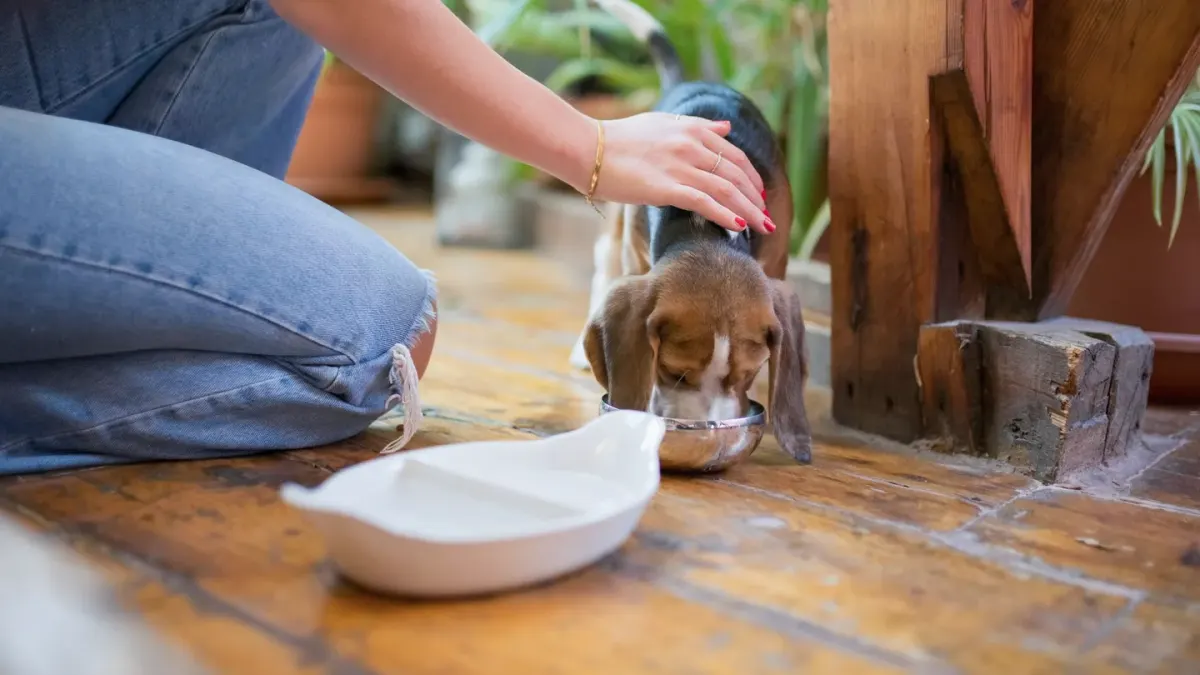
Wet food does not reset your dog’s gut. It changes transit, moisture, and how meals ferment, and that explains most of the soft stool owners blame on the wrong probiotic.
The mechanism is plain: kibble is typically 8-12% moisture with more starch and extruded fiber, while canned food is often 70-80% moisture with higher protein and fat on a dry-matter basis and different fiber types. More water plus a sudden fiber drop speeds colonic transit. Faster transit means less water reabsorption and looser-appearing stool for 3-5 days, even when the microbiome itself has not failed. A probiotic can support normal digestive balance through that window, but it cannot slow transit that is driven by diet change alone.
I saw this with a 6-year-old, 48-pound pit mix moving from chicken kibble to a turkey pâté for dental reasons. The owner transitioned over only 3 days and called on day 4 convinced the old Lactobacillus chew had stopped working because the dog had produced 5 soft, urgent evening stools in a row. We did not swap strains. We stretched the blend to 10 days at 75/25, 50/50, then 25/75, kept the same probiotic and meal times, and added a measured fiber topper. By day 9 the stool log showed two formed morning movements and no nighttime urgency.
That is the limit I set with every food switch: probiotics may help support normal stool consistency and digestive function during dietary change, but they do not replace a gradual transition, correct portions, or diagnosis when vomiting, bloody diarrhea, or appetite loss appears.
No, wet food alone does not call for a new formula
Strains do not know kibble from canned. What matters is whether the label names the strain, states colony-forming units through expiration, and comes from a manufacturer with lot-level quality controls. The NIH Office of Dietary Supplements explains that probiotic effects are strain-specific and dose-dependent, which is why vanity CFU counts without strain identity tell you very little. The National Animal Supplement Council makes the same point for animals through its quality seal program: look for independent verification, adverse-event reporting, and honest labeling before you look at marketing.
Keep your current product if stools were normal on kibble, the label lists Enterococcus faecium, Bifidobacterium animalis, Lactobacillus acidophilus, or another defined strain, and your dog is otherwise bright and eating. Switching brands at the same moment you switch foods leaves you with two variables and no answer.

Myth: richer wet food wipes out good bacteria
Richer is usually just wetter and more digestible. Fat and moisture can soften stool and increase volume, yet that is an osmotic and transit effect, not proof of dysbiosis. The U.S. Food and Drug Administration reminds owners that complete pet foods differ widely in nutrient profiles even when both meet the same nutritional standard, so a direct gram-for-gram swap often overfeeds calories.
I learned the tradeoff with a 3-year-old, 18-pound French bulldog whose owner tossed the kibble overnight and started full cans plus a new 10-strain powder at double the scoop to prevent diarrhea. For 6 nights the dog woke twice to go, then refused breakfast on day 7. Two changes at once meant we could not tell whether fat, fiber loss, over-supplementation, or simple volume was the trigger. We paused the new powder, went back to 75% old diet for 4 days, then reintroduced wet food alone over a week. The lesson stuck: change food first, hold supplements steady, and judge one variable at a time. For a calmer way to compare labels during any switch, see How Many CFU Does a Dog Probiotic Actually Need?
One short paragraph holds the line. If diarrhea lasts beyond the transition, that is not a strain failure.
The sequence that actually steadies the switch
Stretch the blend over 7-10 days, longer for seniors or sensitive stomachs. Keep total daily calories constant, because a 13-ounce can is not equivalent to 13 ounces of kibble. Feed at the same hours, keep treats under 10% of calories, and log stool score, appetite, and gas for a week. Hold the probiotic dose steady unless your veterinarian advises otherwise. Add fiber only deliberately — a teaspoon of plain canned pumpkin or psyllium for a medium dog — rather than stacking prebiotics, enzymes, and a new probiotic together.
Dose timing matters less than consistency. Give the supplement with or just before the meal so organisms travel with food, store it as directed, and do not chase a higher CFU if stools are already improving. If you are weighing cost per day while you experiment, Does a Bigger Bag of Probiotic Chews Actually Cost Less Per Serving for Dogs? shows how to do the math without guessing.
The exception bends the rule. A 12-year-old, 62-pound Labrador with missing molars had to move to soft food quickly after a dental extraction, with only a 4-day window before the owner left town. We accepted a faster switch, kept the familiar probiotic, fed four small meals instead of two, weighed every can for 7 straight days to hold calories level, and scheduled a recheck if watery stool passed 48 hours. Speed was the medical priority, so we narrowed every other variable to compensate. Senior dogs often need that kind of adjustment, discussed further in Do Senior Dogs Need to Change Their Probiotic Dose as They Age?
What would change my mind: a controlled trial in dogs showing that a wet-food-specific strain blend meaningfully improves stool scores or transit time versus the same strains given during a kibble-to-kibble switch. Until that evidence exists, the current physiology and strain-specific data do not support buying a different probiotic just because the food got wetter.
Keep the probiotic you trust, transition the food slowly, and let formed stools — not the can label — decide.
Frequently asked questions
Should I stop probiotics while switching to wet food?
No. Keep a working product steady through the 7- to 10-day transition so you can judge the food change alone. Stop and call your veterinarian if vomiting, bloody stool, lethargy, or refusal to eat lasts more than a day.
When does soft stool after switching need a vet visit?
Call promptly for watery diarrhea beyond 48 hours, blood or mucus, repeated vomiting, abdominal pain, or dehydration. Those signs point beyond normal transit change.
Sources
- Probiotics - Health Professional Fact Sheet — NIH Office of Dietary Supplements
- Quality Seal Program — National Animal Supplement Council
- Pet Food — U.S. Food and Drug Administration