On this page
- Why Does the Extract on the Label Matter More Than the Word “Ashwagandha”?
- What Is KSM-66, Exactly, and How Is It Different From Plain Ashwagandha Powder?
- The Beagle Who Made Me Start Reading the Withanolide Column
- What Does the Canine Research Actually Show?
- Does the HPA Axis Actually Care Whether It’s Extract or Powder?
- A Practical Sequence for Reading an Ashwagandha Label Before You Buy
- Where I Land, and the Honest Counterargument
- FAQs
Why Does the Extract on the Label Matter More Than the Word “Ashwagandha”?
Here’s the limitation nobody puts on the bag: “ashwagandha” is a plant name, not a dose. Withania somnifera root can be ground into a powder with almost no measured withanolide content, or it can be processed into a standardized extract with a withanolide percentage printed on the certificate of analysis. Both get sold under the same word on a dog treat label, and that’s the whole problem.
I trace almost every adaptogen question back to the hypothalamic-pituitary-adrenal axis before I trace it to a bag of herb. Ashwagandha’s proposed mechanism runs through that feedback loop — modulating the stress response rather than sedating it outright — and a feedback loop only responds predictably to a dose you can actually calculate. That’s the real fault line between KSM-66 and generic powder: not marketing, but whether the withanolide input into that axis is known or guessed.
What Is KSM-66, Exactly, and How Is It Different From Plain Ashwagandha Powder?
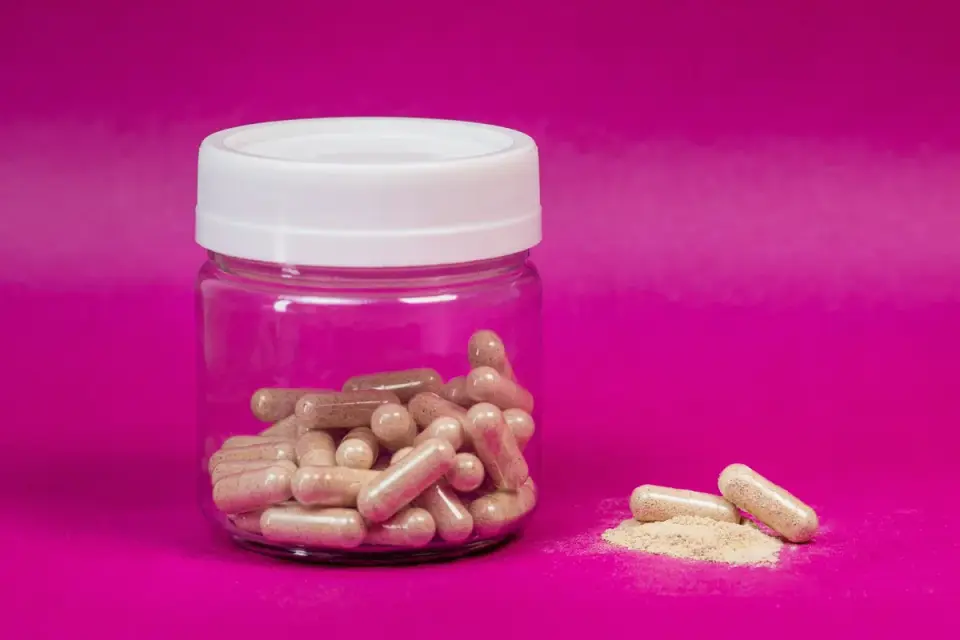
KSM-66 is a specific, patented, root-only extract manufactured through an aqueous (water-based, solvent-free) process and standardized to greater than 5% withanolides, confirmed by HPLC testing. That standardization is the entire point: every batch is supposed to deliver roughly the same withanolide load per milligram, which is what lets a researcher — or a veterinarian — calculate a milligram-per-kilogram dose with any confidence.
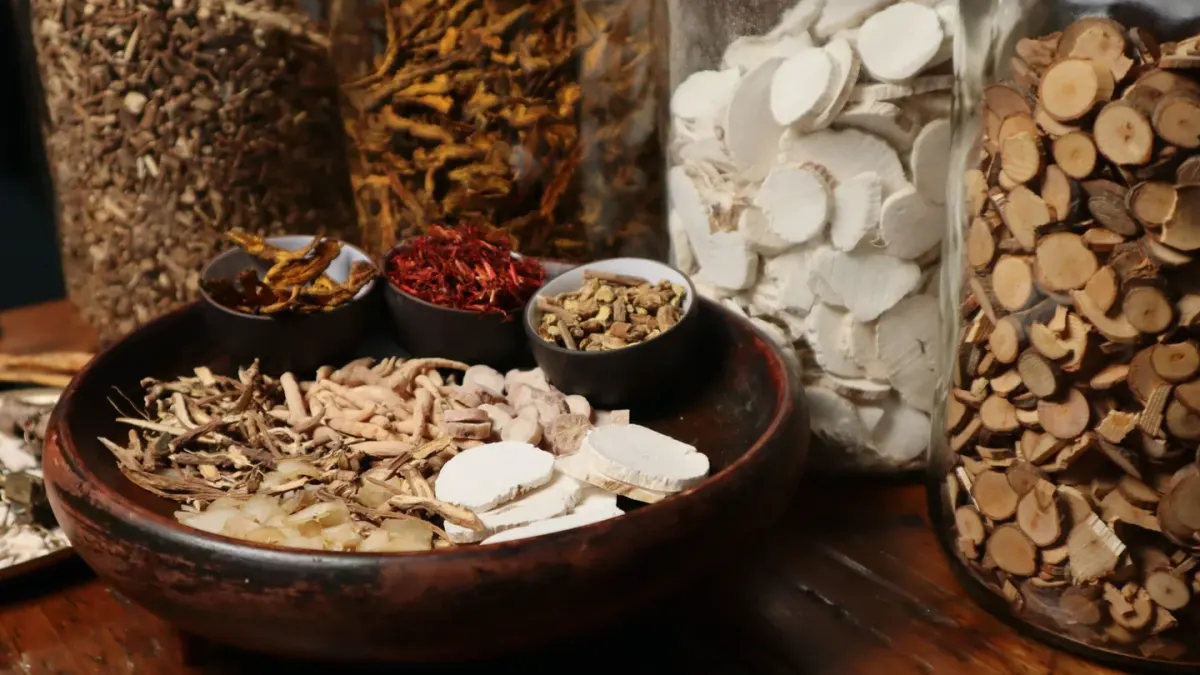
Regular ashwagandha powder is usually just dried, milled root. It may contain withanolides in the same general family, but without a stated percentage, you’re guessing at strength every time you open the bag. Two bags of “ashwagandha powder” from two different growing seasons can differ meaningfully in potency, and neither will tell you by how much.
The Beagle Who Made Me Start Reading the Withanolide Column
I had a 13-year-old Beagle in my care, a spayed female around 24 pounds, whose owner wanted something for stiffness and what she described as “just seeming worn down” — less interest in her evening walk, softer stool most weeks, sleeping later into the morning than she used to. The owner had already tried a bulk ashwagandha powder from a supplement aisle, unstandardized, dosed by eyeballing a quarter teaspoon into food. Nothing changed in six weeks, and I didn’t find that surprising, because we had no idea what dose she’d actually been giving.
We switched to a standardized extract product with a stated withanolide percentage and dosed it to her body weight instead of a spoon size. Over the following two months her stool consistency firmed up and her owner started volunteering, unprompted, that she was waiting at the door again at walk time. I can’t call that proof of anything in one dog — it’s a single case, not a trial — but it’s exactly the pattern the canine research below has started to describe at a group level, and it’s why I stopped treating “ashwagandha” as a single ingredient in my head.
What Does the Canine Research Actually Show?
The evidence base specific to dogs is still small, but it’s real, and it uses standardized extract, not bulk powder. A randomized controlled trial in domestic dogs, published via ScienceDirect, tested a standardized Withania somnifera root extract dosed at 15 mg/kg body weight and reported meaningful reductions in stress-related signs with no adverse events at that dose.
A separate randomized, double-blinded, placebo-controlled trial in twelve healthy geriatric Beagles, using a KSM-66 extract standardized above 5% withanolides at the same 15 mg/kg dose over sixty days, is described in The Role of Ashwagandha in Modulating Gut Parameters in Dogs. It found significant improvements in fecal score by day 30, along with increases in fecal short-chain fatty acids and L-citrulline by day 60 — markers tied to gut and mucosal function, not just stool firmness. If you’re already tracking your dog’s stool and appetite patterns as early signals, that’s the same instinct behind our guide on signs your dog needs a probiotic — gut markers move before owners notice anything dramatic.
A related trial in the same geriatric Beagle cohort, summarized in Effects of Ashwagandha Root Extract on Aging-Related Changes in Healthy Geriatric Dogs, reported the standardized extract was well tolerated with no adverse events and associated it with favorable shifts in red blood cell counts, hemoglobin, and liver enzyme values that stayed within normal physiological ranges. None of these are large studies. All of them used a standardized, withanolide-quantified extract, dosed by body weight — not a scoop of powder from an unlabeled jar.
On the human side, where the evidence base is far larger, a prospective observational study of KSM-66 specifically, covering 191 adults over twelve months and published in Phytotherapy Research, reported mild adverse events in only 9.4% of participants and no serious safety signals, alongside favorable shifts in cortisol. That’s not canine data, and I won’t pretend it transfers pound for pound, but it’s the kind of long-duration safety record that only exists because the extract itself is standardized and traceable batch to batch — the same reason I’d want a dosing study on a dog to specify withanolide percentage before I trust the number attached to it.
Does the HPA Axis Actually Care Whether It’s Extract or Powder?
In principle, the axis doesn’t care about the word on the label — it responds to withanolide exposure, full stop. In practice, it can only respond predictably to an exposure you can measure. An unstandardized powder might deliver a therapeutic withanolide dose in one scoop and a fraction of that in the next, depending on the root’s harvest and processing. That variability is the practical reason I favor an extract with a stated percentage: not because “extract” is inherently superior to “powder” as a form, but because you can’t titrate a feedback loop against a number you don’t have.
A Practical Sequence for Reading an Ashwagandha Label Before You Buy
Start with the withanolide percentage. If a product doesn’t state one, you cannot calculate a dose, full stop — treat that absence as disqualifying, not as a minor omission.
Next, check that the dose is expressed relative to your dog’s weight, ideally in milligrams of extract per kilogram, rather than a generic “one scoop for all dogs” instruction. Confirm the extraction method if it’s listed — aqueous, solvent-free processing is what the published canine studies used. Look for third-party testing or a certificate of analysis, the same baseline scrutiny worth applying any time you’re vetting a new supplement label, including checking it for hidden ingredients that have no business in a dog’s bowl — our guide on whether a human probiotic capsule contains xylitol unsafe for dogs walks through exactly that kind of label-reading discipline. Finally, loop in your veterinarian before starting, especially if your dog is on thyroid medication, sedatives, or has a history of liver disease — ashwagandha’s endocrine effects mean it isn’t a neutral add-on for every metabolic picture.
Where I Land, and the Honest Counterargument
I recommend standardized extract over raw powder for dogs, and I recommend it specifically because the axis I’m trying to influence only responds predictably to a known dose. The honest counterargument is that unstandardized powder isn’t necessarily unsafe — plenty of dogs tolerate it without incident, and cost matters to owners managing a fixed supplement budget. I don’t dismiss that. But “well tolerated” and “effective at a defensible dose” are different claims, and the canine trials that support ashwagandha’s stress and gut benefits were run on standardized extract, dosed by body weight, not on a spoonful of unmeasured root.
I had another dog this year, a 9-year-old mixed-breed with generalized anxiety around thunderstorms, whose owner asked me point-blank whether the cheaper powder “would basically do the same thing.” I told her the truth: I didn’t know, because nobody has run that comparison directly in dogs. What we do know is what the standardized-extract trials showed, and that’s the only version of this ingredient I’m willing to stand behind with a specific dose in mind. She went with the labeled extract. I’d make the same call again.
FAQs
Frequently asked questions
Is KSM-66 the same thing as ashwagandha powder?
No. KSM-66 is a specific, patented root extract standardized to a stated withanolide percentage and produced through a water-based extraction process. Regular ashwagandha powder is typically just dried, ground root with no confirmed withanolide content, so potency can vary batch to batch.
What dose of ashwagandha has been studied in dogs?
Published canine trials have used a standardized extract at 15 mg per kilogram of body weight, dosed once daily. This dose has not been established for unstandardized powder, and dosing should always be confirmed with your veterinarian first.
Can ashwagandha interact with a dog's thyroid or hormone levels?
Ashwagandha is believed to act on the hypothalamic-pituitary-adrenal axis, so it isn't a neutral add-on for dogs with thyroid disease, dogs on sedatives, or dogs with liver conditions. Talk to your veterinarian before starting it in any of those situations.
Is unstandardized ashwagandha powder unsafe for dogs?
Not necessarily unsafe, but unproven at a specific, calculable dose. The canine research supporting ashwagandha's stress and gut benefits was conducted with standardized extract, not raw powder, so the same confidence doesn't automatically extend to an unmeasured product.
Sources
- Efficacy and Safety of Standardized Ashwagandha (Withania somnifera) Root Extract on Reducing Stress and Anxiety in Domestic Dogs: A Randomized Controlled Trial — ScienceDirect
- The Role of Ashwagandha in Modulating Gut Parameters in Dogs — PMC
- Effects of Ashwagandha Root Extract on Aging-Related Changes in Healthy Geriatric Dogs — PMC
- Safety of 12-Months Administration of Ashwagandha (Withania somnifera) Standardized Root Extract in Healthy Adults: A Prospective, Observational Study — Phytotherapy Research