On this page
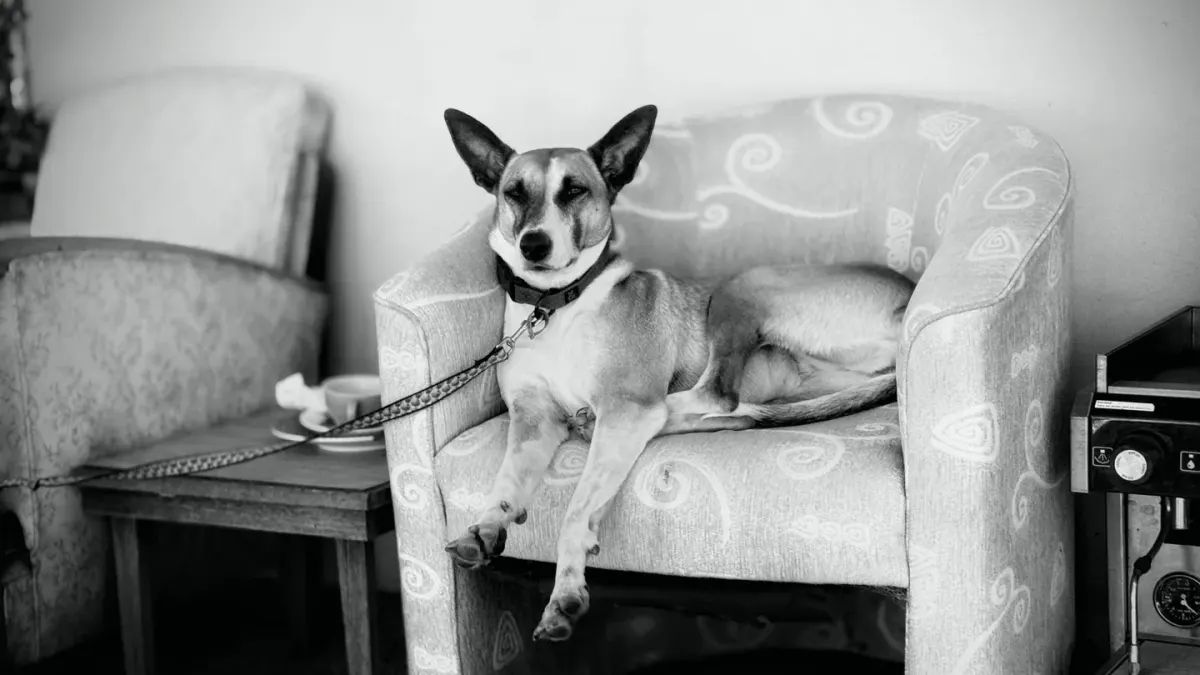
Gait tells me things owners haven’t said out loud yet. A dog that hugs the baseboards on the way into an exam room, tail tucked, weight shifted back onto the haunches before it’s even been touched — that’s a nervous system bracing, not a posture problem, but I read it the same way I read a limp: as information about load and coping. So when an owner asks me whether they should plug in a pheromone diffuser or start an oral calming chew, I don’t answer with a product. I answer with a question: what is this dog actually reacting to, and for how long does that reaction need to be managed?
That distinction is the whole article, honestly. Diffusers and oral aids are not competing versions of the same tool. One conditions an environment. The other changes what’s circulating in the bloodstream. Confusing them is why so many owners feel like they “tried calming stuff and it didn’t work” — they used the wrong modality for the trigger they had.
The limitation nobody puts on the diffuser box
Dog-appeasing pheromone (DAP) products — sold under names like Adaptil — are synthetic analogs of a pheromone lactating mother dogs release to reassure nursing puppies. The idea is sound biology. The evidence, once you go past the marketing page, is more mixed than most packaging implies.
A systematic review published in the Journal of the American Veterinary Medical Association found that only one of eight controlled studies provided sufficient evidence that DAP reduces fear or anxiety — and that was specifically in puppies during training classes, not in adult dogs generally. Six studies found insufficient evidence that DAP helps with noise phobia, which is the exact use case — thunderstorms, fireworks — that most owners reach for a diffuser to solve.
A separate appraisal in Veterinary Evidence narrowed this further: moderate evidence for thunderstorm-related fear behaviors, weak evidence for hospitalized dogs, mild evidence for shelter dogs’ barking and relaxation behaviors. Notably, that review also found no evidence that any DAP formulation — diffuser, collar, or spray — outperforms the others. So if a diffuser is going to help at all, plugging in more of them, or upgrading to a collar, isn’t the lever.
The stronger data sits with puppies. Research on PubMed: dog-appeasing pheromones during training and long-term socialization found that puppies in DAP groups had longer, more positive interactions in class and adapted faster to new environments at follow-up, compared with placebo. That’s a real, reproducible signal — but it’s a puppy-socialization finding, not a blanket “calms anxious dogs” finding.
What oral calming aids are actually doing differently
Oral aids work through ingested compounds that act on neurochemistry, not ambient scent. The two with the most published support in dogs are L-theanine and alpha-casozepine, and they don’t behave the same way on the clock.
L-theanine, an amino acid from tea leaves, has a faster onset — in the range of 30 to 60 minutes — which is why it’s most often studied and used situationally, ahead of a known trigger like a storm or a vet visit. A review by veterinary toxicology writer skeptvet on the branded L-theanine product Anxitane notes that open-label studies in storm-sensitive dogs found reduced pacing, panting, and hiding, but flags that the trials are small, often unblinded, and frequently funded by the ingredient’s manufacturer — real signal, read as moderate rather than definitive.
Alpha-casozepine, a milk-derived peptide with a structure homologous to benzodiazepines, works on a slower build — typically two to four weeks of daily dosing — which makes it a chronic-anxiety tool, not a same-day fix. A blinded, randomized multi-center trial comparing alpha-casozepine against the prescription drug selegiline found comparable improvement in owner-reported anxiety scores between the two, which is a meaningfully strong data point for a supplement to carry. But there’s no evidence it works given minutes to days before a specific stressor — so it’s the wrong choice for “the fireworks are tonight.”
A dog I worked with who made this concrete
I had a twelve-year-old, 58-pound female Golden Retriever named Sadie come through my rehab practice for a torn CCL recovery, and about six weeks into her post-op restriction — crate rest, short leash walks only, no stairs — her owner mentioned, almost as an aside, that Sadie had started shredding the corner of a dog bed and pacing the hallway every evening around 6 p.m., right when the owner’s teenage kids got home from practice and the house got loud. It wasn’t separation anxiety and it wasn’t storm phobia; it was a predictable daily noise-and-activity spike in a dog whose mobility was already restricted and whose coping options — pacing the yard, greeting people at the door — had been taken away by the orthopedic recovery. We didn’t reach for a pheromone diffuser, because the trigger wasn’t ambient environmental stress, it was a specific daily event with a specific onset time. We used an L-theanine chew timed about 45 minutes before the after-school rush, alongside adjusting her crate location away from the front hallway. Within about ten days the owner reported Sadie was lying down through the noise instead of pacing. That’s one dog, not a study — but it’s the exact kind of trigger-matching I mean when I say the tool has to fit the problem, not the shelf label.
Reading a gait for anxiety, not just for lameness
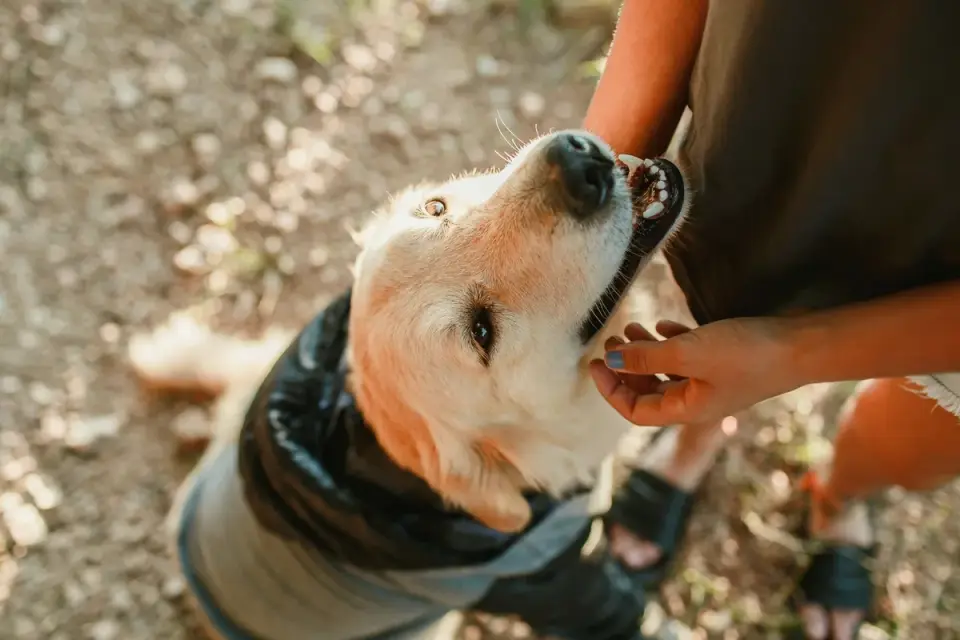
I keep coming back to biomechanics because it’s the only honest way I know to separate a truly anxious dog from one that’s simply guarding a sore joint — and owners conflate the two more than they realize. A dog with hip or spinal discomfort will often show the same low-tail, weight-shifted-back posture as a genuinely anxious dog, minus the panting and the pacing. Before I recommend either a diffuser or an oral aid, I want to rule out load and pain as the actual driver, because no amount of pheromone or L-theanine touches a sore stifle. Layering acupuncture or chiropractic work into a dog’s plan sometimes resolves what looked like “anxiety” because the dog was bracing against movement, not against the environment. That’s not a detour from the calming-aid question — it’s the first filter that determines whether either category is even the right answer.
A practical sequence for choosing between them
For a genuinely situational trigger — thunderstorms, fireworks, a single stressful car ride — an oral aid with a fast onset, like L-theanine, dosed ahead of the event, is the better-supported starting point. For an ambient, chronic environment — a multi-dog household with ongoing tension, a newly adopted adult dog still settling in — a DAP diffuser has its best-supported use case in puppies and in hospital or shelter-type settings, with weaker evidence in general adult home anxiety. For daily, chronic anxiety that isn’t tied to a specific trigger, alpha-casozepine’s two-to-four-week build makes it the better structural fit, and it should be started well before you need to see a result, not the morning of.
None of these replace a full behavioral workup for a dog with significant anxiety, and none of them are a substitute for identifying whether pain or restricted mobility is driving what looks like fear. If you’re also evaluating what’s inside a calming or gut-health chew, it’s worth checking whether a human probiotic capsule your dog got into contains xylitol, since ingredient overlap between human and pet products causes real confusion at the pharmacy counter. And if gut symptoms are part of the anxiety picture — some dogs pace and have loose stool together — it’s worth reading through the signs your dog may need a probiotic before assuming the issue is purely behavioral.
Where I land, and the honest counterargument
My position: match the modality to the trigger’s timeline, not to whichever product is easiest to buy. Fast-onset oral aids for situational stress, alpha-casozepine for chronic daily anxiety, and DAP diffusers reserved for puppies in training or ambient multi-dog tension where the evidence is strongest. The counterargument I hear most from colleagues is that DAP is essentially risk-free and cheap enough that there’s no harm in trying it broadly, even where the evidence is weak — and that’s fair. A diffuser won’t hurt a dog. But “won’t hurt” isn’t the same as “will help,” and I’d rather an owner spend that first two weeks on the tool with better odds behind it, especially with a dog who’s already stressed and doesn’t have unlimited patience for owners experimenting.
So which one is right for your dog? That depends less on the aisle you shop in and more on whether you can name, specifically, what sets the anxiety off — and I’d ask that question before I’d ask which product to buy.
Frequently asked questions
Can I use a pheromone diffuser and an oral calming aid at the same time?
There's no published evidence that combining them is harmful, and they act through different pathways, but talk to your veterinarian before layering products, especially if your dog is on any other medication.
How long does it take to know if a calming aid is working?
Fast-onset oral aids like L-theanine should show effects within about an hour of dosing. Alpha-casozepine and pheromone diffusers both need a longer trial window — typically two to four weeks of consistent use before you can fairly judge them.
Are pheromone diffusers safe around cats or other pets in the home?
Dog-appeasing pheromone is species-specific to dogs and is generally not intended to affect cats, but if you have multiple species in the home, check the product label and ask your vet about any household-specific concerns.
Sources
- Systematic review of the use of pheromones for treatment of undesirable behavior in cats and dogs — Journal of the American Veterinary Medical Association
- Can dog appeasing pheromone ameliorate stress behaviours associated with anxiety in mature domestic dogs? — Veterinary Evidence
- Effects of dog-appeasing pheromones on anxiety and fear in puppies during training and on long-term socialization — PubMed
- Evidence Update: Anxitane (L-theanine) for Anxiety in Dogs (and Cats) — skeptvet