On this page
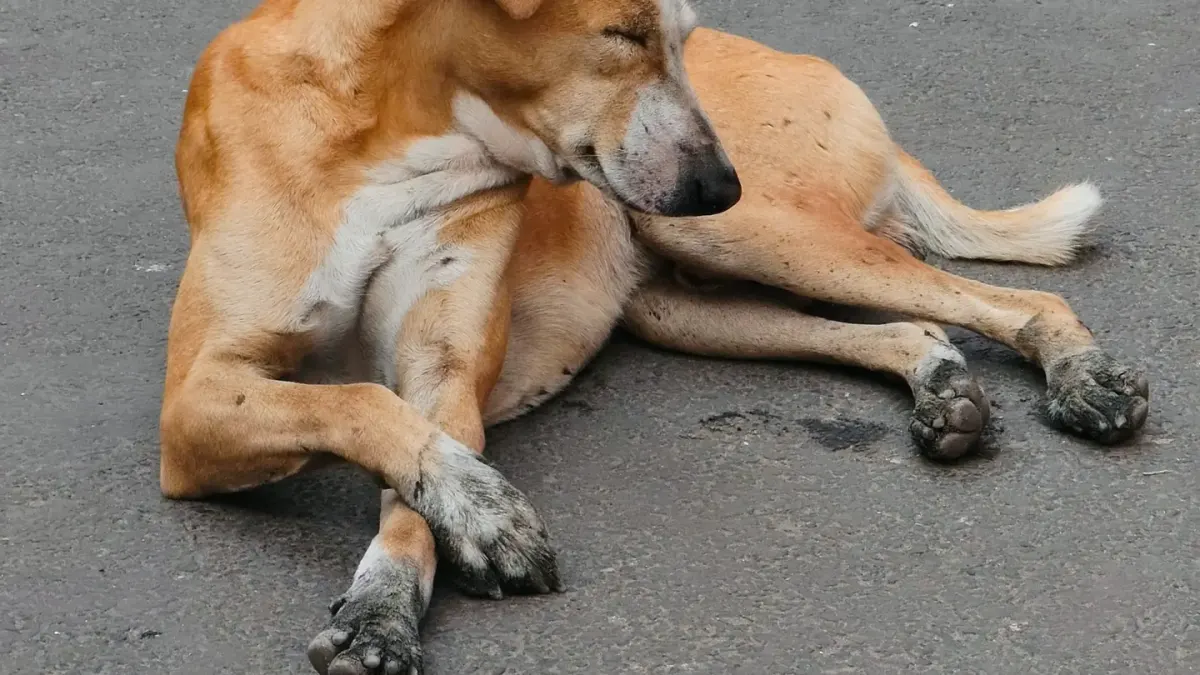
A retriever mix I’ll call Millie came into a client’s kitchen story the way a lot of pancreatitis cases do: quietly. Her owner had given her a spoon of bacon grease off the holiday roasting pan two nights earlier, the kind of thing that happens in every house with a dog and a turkey. By the second morning Millie wasn’t herself. She turned down breakfast, which never happened, and when her owner crouched to check on her, Millie folded down onto her front legs with her hips still up, like she was mid-stretch and stuck there. She vomited once in the yard, then again an hour later. Her owner almost waited it out, because Millie wasn’t crying and didn’t seem frantic — just still, and folded into that odd position, and uninterested in the dinner sitting untouched in her bowl. That stillness is the part I want owners to hear. Pancreatitis in dogs rarely announces itself with drama. It shows up as a dog who stops eating, holds her body differently, and brings up her stomach contents more than once in a day.
What’s Actually Happening Inside the Pancreas
The pancreas makes digestive enzymes and stores them in an inactive form until they reach the small intestine. When something — a high-fat meal, an endocrine disorder like hypothyroidism, certain medications, or in many cases no identifiable trigger at all — causes those enzymes to activate early, they begin digesting the pancreas itself. The result is local inflammation, pain, and a cascade of nausea and vomiting as the gut reacts to an organ that’s essentially injuring itself. In Merck Veterinary Manual’s description of the disease, that inflammatory process is what drives the classic presentation: a dog who is painful, nauseated, and increasingly unwilling to eat. In Western terms this is acute pancreatic inflammation. In the TCVM framework I also use in exam rooms, a dog presenting this way often fits a Spleen Qi deficiency pattern layered over Stomach heat — digestive fire flaring against a system that’s already struggling to transform food. I don’t treat the pattern instead of the pancreatitis. I treat the pancreatitis with Western diagnostics and supportive care, and I use the pattern language to explain to an owner why bland, warm, easily-digested food matters more than usual during recovery.
The Full Sign List, Sorted by Urgency
According to VCA Animal Hospitals, the most consistent signs are repeated vomiting, abdominal pain, lethargy, decreased appetite, and diarrhea, sometimes with a low-grade fever. Pain is where dogs vary the most. Some hold the classic hunched, front-down posture. Others simply go quiet, decline a walk, or tuck into a corner rather than crying out. Mild, single-episode vomiting after a dietary indiscretion is common and usually resolves on its own. Vomiting that repeats, pairs with reduced appetite, or is accompanied by a hunched posture or visible discomfort is a different situation and warrants same-day veterinary evaluation rather than a wait-and-see approach at home.
A second dog, a senior beagle whose owner had already read every symptom list online, illustrates the trap of relying on a checklist alone. He wasn’t vomiting. He was eating half his normal portion, moving stiffly, and sleeping more than usual — signs easy to file under ‘getting older.’ It took a hands-on exam and bloodwork to catch the abdominal tenderness and the elevated pancreatic lipase that pointed to a low-grade, smoldering pancreatitis rather than simple arthritis. That case is why I push back on owners treating any single sign as diagnostic on its own. The signs matter as a pattern, read against the whole dog, not as a solo red flag to google and dismiss.
Where the Gut Fits After the Flare
Once pancreatitis is confirmed, treatment is medical, not nutritional guesswork — but nutrition and gut support carry real weight in recovery. For dogs whose pancreas has been damaged enough to stop producing adequate digestive enzymes, a related but distinct condition called exocrine pancreatic insufficiency (EPI) can follow. As the JAVMA review states, “EPI is treated by pancreatic enzyme replacement therapy, nutritional management (low-residue diets with moderate fat content), and supplementation of cobalamin.” That same review notes that “future studies are needed to further understand the causes of persistent dysbiosis in animals with EPI following initiation of pancreatic enzyme replacement therapy and assess the efficacy of treatments to ameliorate these abnormalities” — in plain terms, some dogs’ gut bacteria stay out of balance even after enzyme therapy starts working, and researchers don’t yet fully know why. A related Frontiers in Veterinary Science trial in dogs found that “diversity metrics did not distinguish non-responders from responders,” a reminder that a diverse-sounding microbiome isn’t automatically a healthy one — a point worth keeping in mind before reading too much into any probiotic’s marketing. This is where a probiotic may help support digestive comfort during a supervised recovery diet; it is not where pancreatitis itself gets treated.
Our guide on signs your dog needs a probiotic walks through what that supportive role looks like day to day, and how to tell an unsettled gut from something that needs a vet visit instead.
A Feeding and Monitoring Sequence for the First Two Weeks
Recovery generally follows a sequence: fasting or a very small bland meal in the first 24 hours if the vet advises it, then a gradual return to a low-fat, low-residue diet, then rechecks to confirm bloodwork has normalized before returning to a regular diet. Owners often ask about adding a gut-support supplement partway through. That decision belongs with the treating vet, since timing matters and a poorly chosen product can add fat or unfamiliar ingredients at the wrong moment. Our comparison of probiotic options scores products on strain evidence and label transparency for exactly that later stage of recovery, once the acute phase has passed.
When to Call the Vet Tonight, Not Tomorrow
If a dog vomits more than once in a day, refuses food, or shows a hunched or painful posture, the practical next step is a same-day call to a veterinarian rather than a home remedy. Bring a clear timeline: when the vomiting started, what was eaten in the prior 48 hours, and whether the dog is drinking water. That information shortens the path to diagnosis and, in a disease where early supportive care changes outcomes, time is the one variable owners can actually control.
Frequently asked questions
Can a probiotic cause or prevent pancreatitis?
No. Pancreatitis is inflammation of the pancreas, usually tied to a fat load, an endocrine disorder, or an unknown trigger — a probiotic does not cause it and is not a treatment for it. Where probiotics may help support is afterward, as part of nutritional management once a vet has confirmed the diagnosis and settled the gut.
Is vomiting without pain still worth an urgent vet visit?
Yes. Some dogs, especially small breeds and older dogs, show flat lethargy and a quiet refusal to move rather than obvious pain. Repeated vomiting on its own is enough reason to call a vet the same day.
How long does recovery from pancreatitis usually take?
It varies with severity, but most dogs are managed on a low-fat diet and supportive care for one to several weeks, with bloodwork used to confirm the pancreas has settled before food is liberalized.
Sources
- Pancreatitis in Dogs — VCA Animal Hospitals
- Pancreatitis in Dogs and Cats — Merck Veterinary Manual
- Exocrine Pancreatic Insufficiency in Dogs — JAVMA
- Probiotic Supplementation and Gut Microbiome Diversity in Dogs — Frontiers in Veterinary Science