Picture a low-key retriever mix who eats a stray chicken bone from the counter and spends the evening throwing up, then wakes the owner at 2 a.m. with watery diarrhea in the hallway. By morning the dog looks tired but not distressed — tail still wagging, water bowl half empty. The owner’s first instinct is to offer breakfast as usual, on the theory that an empty stomach can’t be good for a dog who’s already lost fluid. That instinct is understandable, and it’s also the first place this guide has to slow down, because what a dog’s gut needs in the first twelve hours after vomiting and diarrhea is rest, not a full meal.
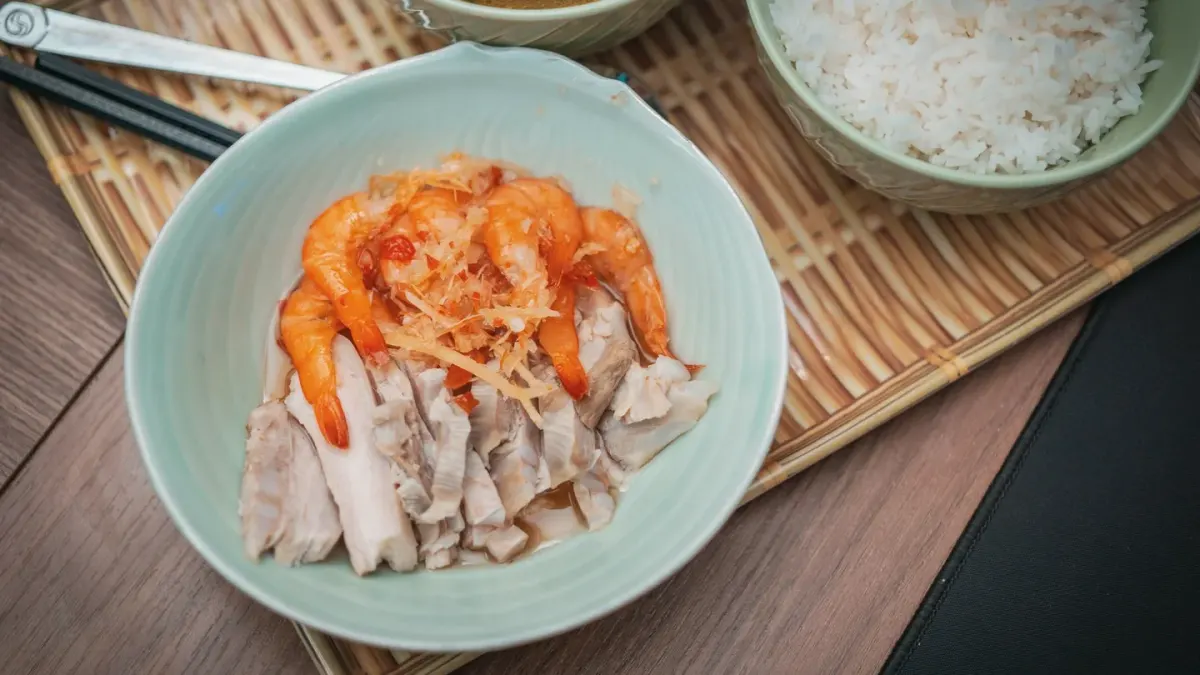
What should you feed a dog after vomiting and diarrhea? The honest answer is: not much, at first, and then something very plain. A short food pause — commonly cited as roughly twelve hours, with water still offered — gives an irritated gut a break before it’s asked to digest anything, according to VCA Animal Hospitals. After that window, if the dog is keeping water down, small amounts of a plain, low-fat, low-residue food — commonly boiled chicken or turkey with plain white rice — offered in frequent small portions rather than one normal-sized meal is the standard next step.
The surprising limitation nobody mentions
Here’s the part that trips owners up: bland food isn’t a cure, it’s a management tool. It reduces the digestive workload while the gut lining heals; it doesn’t address whatever triggered the episode in the first place — dietary indiscretion, a viral bug, parasites, or, less commonly, something more structural like pancreatic disease. That’s a meaningful distinction. A dog with true exocrine pancreatic insufficiency, for instance, needs pancreatic enzyme replacement and a genuinely low-fat diet managed long-term, not a three-day bland-food course — JAVMA notes that EPI is treated by pancreatic enzyme replacement therapy, nutritional management with low-residue, moderate-fat diets, and cobalamin supplementation. Most dogs who vomit once and have loose stool for a day don’t have EPI. But the point stands: bland food buys time and comfort, it doesn’t diagnose.
Myth versus reality: what actually belongs in the bowl
The myth is that any bland food will do, as long as it’s mushy and mild. The reality is narrower. Fat is the main thing to strip out — fried skin, gravy, table scraps, and rich commercial diets all ask more of a stressed gut than it can currently give. Seasoning, onion, and garlic are out entirely. Within those limits, there’s room to vary: plain boiled chicken or lean turkey, white rice or a small amount of plain boiled or baked sweet potato, and plain canned pumpkin worked in as a topper. Pumpkin fiber is a gentle, natural source of both soluble and insoluble fiber, which is part of why it shows up so often in home GI-support routines. None of these ingredients are medications, and none of them substitute for veterinary care if the pattern doesn’t resolve.
Reading the whole dog, not just the stool
My training pulls from both sides of the exam room — a TCVM pattern read alongside a standard Western workup — and this is exactly the kind of case where both lenses earn their keep. A Western read asks: is this dog hydrated, is there blood, is there a fever, does the abdomen feel painful? A TCVM read asks something adjacent: does this look like a Spleen Qi deficiency pattern, where the digestive system is simply overtaxed and needs rest and gentle, warming food, or does it look more like a damp-heat pattern, with urgency, odor, and heat signs that point toward something more acute needing intervention sooner? I don’t treat the pattern instead of the diagnosis; I use the pattern to decide how quickly I want a diagnosis. A dog who reads as simple digestive overload, stable vitals, no blood, still drinking, generally earns the home bland-diet trial. A dog who reads as more urgent doesn’t get that trial — they get a same-day visit.
Consider a senior dachshund with a history of sensitive digestion who has three loose stools overnight after a treat-heavy visit to the in-laws. The stool is soft but formed by morning, the dog is bright, drinking normally, and there’s no blood or straining. That’s a reasonable candidate for the fast-then-bland sequence at home, watched closely over the next 24 hours. Now change one detail: the diarrhea is watery, there’s a streak of blood, and the dog is reluctant to move off the dog bed. Same breed, same starting point, very different next step — that dog needs a veterinary exam, not a bowl of rice.
When the kitchen isn’t the answer anymore
A few signs move a case out of home management. Vomiting or diarrhea continuing past 24 hours, blood in either, repeated episodes rather than a single event, and physical signs of dehydration — dry gums, sunken eyes, skin that’s slow to spring back when gently lifted — all warrant a call to the vet rather than another day of bland food, per PetMD. Puppies, seniors, and dogs with existing conditions should be evaluated sooner, since they dehydrate faster and have less reserve.
Where probiotics fit, and where they don’t
Once the acute episode has passed and regular food is being reintroduced, a probiotic is a reasonable piece of the recovery plan — the idea being that it may help support a gut microbiome that’s just been through a stressful stretch, not that it treats the underlying cause. It’s worth staying skeptical of any product built around a huge CFU count and nothing else; strain identity, third-party testing, and honest labeling matter more than the number on the front of the bag, which is the whole premise behind our Best Probiotic for Dogs comparison. It’s also worth checking signs your dog needs a probiotic in the first place, since not every loose stool calls for a daily supplement. And if the recovery kitchen ever includes a human probiotic capsule pulled from a family member’s shelf, it’s worth confirming it doesn’t contain xylitol before it goes anywhere near the dog’s bowl.
One finding worth sitting with: a recent trial in Frontiers in Veterinary Science found that diversity metrics did not distinguish non-responders from responders — meaning a probiotic’s effect on the gut isn’t something you can predict just by looking at how diverse the microbiome appears. That’s a humbling result, and it’s a good reason not to oversell what any supplement, ours or anyone else’s, can promise a recovering gut.
Bottom line: pause food briefly, then feed small, frequent portions of something plain and low in fat, watch for the signs that mean this isn’t a kitchen problem anymore, and treat a probiotic as backup support rather than the plan itself.
Frequently asked questions
Should I withhold food completely after a dog vomits?
Most vets recommend a brief pause on food — commonly cited around twelve hours — while still offering water, then reintroducing small amounts of bland food if the dog is keeping water down. A prolonged fast beyond that window isn't generally advised without a vet's input.
Is chicken and rice always the right bland diet?
Plain boiled chicken and white rice is the most common version because it's low-fat, low-residue, and easy to prepare, but the underlying idea — plain protein plus a simple starch, no seasoning or fat — matters more than the exact ingredients.
When does home feeding stop being appropriate?
Vomiting or diarrhea lasting more than 24 hours, blood in either, repeated episodes, or a dog who seems weak, painful, or won't drink are signals to involve a veterinarian rather than continuing to manage the diet alone.
Can a probiotic help during recovery?
A probiotic may help support a gut microbiome that's already under stress, but it's a supporting piece of the plan, not a treatment on its own — and the research so far hasn't consistently distinguished which dogs respond and which don't.
Sources
- Bland Diet Instructions for Dogs and Cats — VCA Animal Hospitals
- Is My Dog Dehydrated? — PetMD
- Exocrine Pancreatic Insufficiency in Dogs and Cats — JAVMA
- Probiotic Response Variability in Dogs — Frontiers in Veterinary Science