On this page
Most owners glance at the yard and decide ‘looks fine’ in about a second, and that second is usually wrong in a way that matters.
The myth going around is that poop only matters once it turns dramatic — blood, worms, something you can’t ignore. Reality is duller and more useful: the boring daily version carries most of the signal, and by the time it turns dramatic you’ve usually missed a week or two of earlier warning.
Read This Before You Scoop
Here’s the checklist I actually use, in the order I use it:
- Color — a consistent chocolate brown. Not black, not chalky white or gray, not streaked bright red.
- Consistency — holds a log shape, yields to light pressure with a fork, doesn’t puddle.
- Coating — dry to the touch, no slick mucus sheen, no visible fat film.
- Content — no visible worms, no undigested kibble chunks, no foreign material.
- Contour — segmented like caterpillar pieces, not a solid rope and not a scattered pile.
- Frequency — one to two bowel movements a day for most adult dogs, on a fairly stable schedule.
If every box checks out, you’re looking at normal stool. If two or more don’t, that’s your cue to keep watching, not panic — but watch on purpose, not by accident.
The Myth-Versus-Reality of ‘It’s Just Poop’
Owners tend to treat stool as background noise until something looks alarming. The reality: the gut is doing constant, quiet work — absorbing nutrients, fermenting fiber, hosting a microbial community — and stool is the most visible readout of that work. A balanced gut microbiome supports overall immune function, which is part of why a stool that’s drifting off-normal for more than a couple of days deserves more than a shrug.
That doesn’t mean every soft stool is a crisis. Dogs get one-off loose stools from stress, a new treat, or a longer-than-usual walk in the heat. What separates noise from signal is duration and pattern, not any single bathroom trip.
A Trailhead Decision Most Owners Recognize
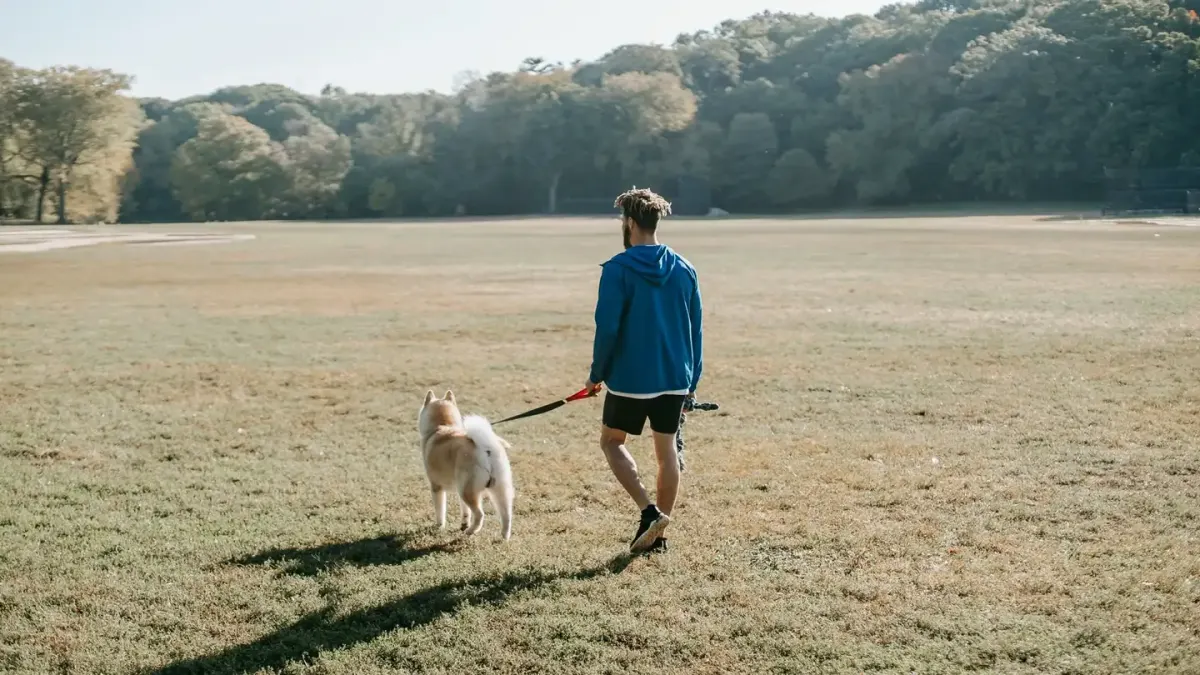
Picture a hiker at a trailhead an hour outside the city, harness on, dog already pulling toward the path before the owner’s finished lacing up boots. Ten minutes in, the dog squats, and what comes out is looser than usual, more khaki than brown, no coating problem but definitely not the tidy log from that morning. The owner has a choice right there: turn around and cut the hike short, or keep going and watch the next one. Most people keep going, and most of the time that’s fine — a change in food, water source, or a stressful morning car ride explains a single soft stool. What tends to get missed is the follow-through: watching the next one, and the one after that, instead of filing the moment away and forgetting it. The pattern that actually matters shows up over days, not during a single squat on a trail, and owners who only remember the alarming photo tend to miss the quieter, earlier signal that would have caught the same problem sooner.
That trailhead moment is the whole argument in miniature: one data point is rarely worth panicking over, but it’s also not worth ignoring outright. Log it. Watch the next one. That’s the discipline, not the drama.
Fecal Scoring Beats Gut Feeling
Veterinary fecal scoring charts typically run one (hard, dry, crumbly) to seven (watery, no shape at all), with four sitting in the ideal middle — firm but moist, holds shape, easy to pick up clean. Most healthy adult dogs sit at a three or four most days. A dog that’s regularly at a two (too dry, effortful) or a five-plus (too soft, tenting) is worth tracking against diet, stress, and activity before assuming it’s random.
This matters more in specific conditions. Dogs with exocrine pancreatic insufficiency, for example, are managed with pancreatic enzyme replacement therapy, nutritional management using low-residue diets with moderate fat content, and cobalamin supplementation, according to JAVMA — a reminder that chronic stool abnormalities sometimes trace back to a diagnosable, treatable cause rather than something a supplement alone will resolve. The same review notes that researchers still don’t fully understand why some dogs on treatment keep a disrupted gut community, so persistent dysbiosis after treatment isn’t automatically a sign something’s being done wrong.
When Color or Consistency Crosses the Line
A few changes deserve a same-day call rather than a wait-and-see:
- Black, tarry stool can mean bleeding higher in the digestive tract.
- Bright red streaks usually point to lower-tract bleeding, closer to the surface.
- Chalky white or gray, greasy stool can signal a bile or pancreatic problem.
- Persistent watery diarrhea, especially with lethargy or vomiting, risks dehydration fast in small dogs and puppies.
Owners sometimes ask whether something they gave their dog by accident could be behind a sudden change. A dropped human probiotic capsule is one example worth ruling out, since some formulations use xylitol; our guide on whether a human probiotic capsule contains xylitol unsafe for dogs walks through that specific risk.
Building the Habit Without Overreacting
Owners who do best at this aren’t the ones who panic at every soft stool. They’re the ones who’ve built a low-key habit: glance before scooping, note anything that’s off, and give it a couple of days before assuming it’s a pattern. Interestingly, in one dog probiotic trial, gut diversity metrics didn’t distinguish which dogs responded to treatment from which didn’t, according to Frontiers in Veterinary Science — a useful humility check against assuming any single test or supplement guarantees a fix. Structure-and-function support, like fiber that helps maintain regular transit, is a reasonable piece of a whole-patient plan; it isn’t a diagnostic shortcut.
If you’re trying to figure out whether your dog’s pattern of stool changes actually warrants a probiotic conversation with your vet, our piece on signs your dog needs a probiotic breaks down which signs are worth acting on and which aren’t. And if you’re past that question and comparing actual products, the scoring behind our vet-scored probiotic comparison walks through strains, CFU, and testing side by side.
Where This Leaves You
Normal dog poop is boring on purpose: brown, log-shaped, dry-coated, once or twice a day. Learn what that looks like for your own dog specifically, because ‘normal’ has a personal baseline as much as a textbook one. Track deviations by duration and severity rather than by how alarming a single photo looks, and reserve the same-day call for the handful of changes — color extremes, persistent watery stool, visible blood — that actually earn it. The gut does this work quietly every day; checking in on it doesn’t have to be dramatic to be useful.
Frequently asked questions
Is a little mucus coating on the stool always a problem?
A thin, occasional mucus sheen can happen after a diet change or minor gut irritation. Frequent, thick mucus, especially with straining or blood streaks, is different and worth a vet visit.
How long should I watch a soft stool before calling the vet?
One off day tied to a treat binge or stress is usually not urgent. Softness that persists past 48-72 hours, or that comes with vomiting, lethargy, or appetite loss, should not wait.
Does stool color change with diet alone?
Yes, mildly, with pigments from certain foods or supplements. But true black, chalky white, or bright red color is a different category and should be evaluated rather than explained away.
Can a probiotic fix chronically abnormal stool?
It can help maintain a more balanced gut environment in some dogs, but it is not a substitute for diagnosing the underlying cause. Our guide on signs your dog needs a probiotic covers the difference between supportive and diagnostic.
Sources
- Exocrine pancreatic insufficiency in dogs — JAVMA
- Diversity metrics did not distinguish non-responders from responders — Frontiers in Veterinary Science